

Pasture – climate-fit for the future
Development of strategic guidelines for sustainable, climate-resilient and economical pasture milk production for different landscapes and grazing strategies in Schleswig-Holstein
Project description
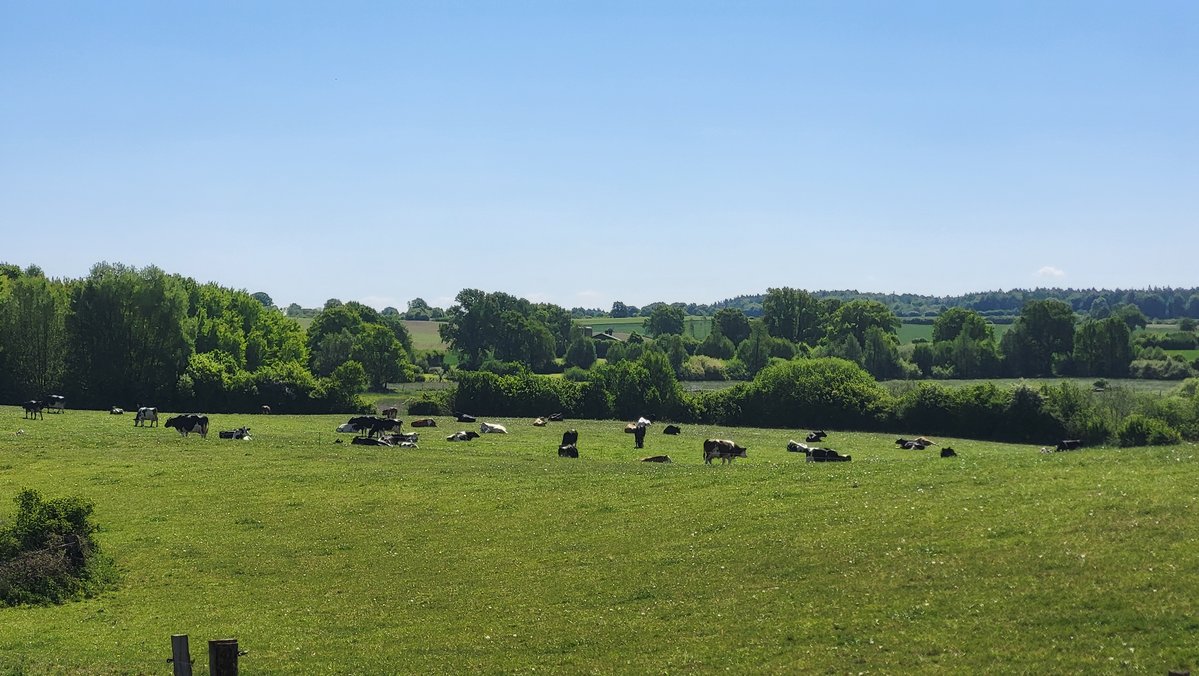
Pasture milk production is facing fundamental changes in the face of climate change. Longer periods of drought, heat and irregular rainfall are increasingly affecting both grassland and dairy cows. In Schleswig-Holstein, where the landscape varies greatly, it is becoming increasingly difficult for many farms to ensure reliable yields and good feed quality. At the same time, animals are sensitive to climatic stress, which affects their feed intake and performance. Although farmers deal with these challenges on a daily basis, there is a lack of clear and scientifically sound recommendations on how they can adapt their pastureland and animal management to the new conditions in the long term. In order to maintain sustainable, economically viable and resilient pasture-based milk production, new solutions are needed to make pasture stocks and grazing animals more resilient to climate-related challenges. Examples include grassland seed mixtures enriched with drought-resistant species and the utilisation of animals' grazing behaviour in pasture management.
This is precisely where the project comes in, developing scientifically sound yet practical guidelines for climate-resilient grazing. The starting point is close cooperation between farmers, advisors and scientists. Together, they conduct studies on real farms that show exactly how grassland and animals respond to different weather conditions, grazing systems and management practices. Modern measurement methods make it possible to better understand the behaviour of cows and find out how well they cope with extreme conditions such as heat or drought. At the same time, grassland areas are being studied in detail to determine which plant mixtures, reseeding strategies and maintenance work can ensure yield and feed quality even in difficult weather conditions. Fertilisation strategies are also being further developed to ensure that nutrients are used efficiently and in an environmentally friendly manner.
This approach benefits many: smaller and larger dairy farms receive concrete assistance on how to adapt their grazing practices to climate change. Dairies gain planning security through more stable deliveries of pasture milk, which is enjoying growing popularity among customers, and rural regions benefit from stronger, sustainable and climate-resilient agriculture. At the same time, high-quality scientific data is generated, enabling further innovations and research projects.
In the long term, the project will help make pasture milk production more resilient to climate change. Farms will be able to better secure their feed base, improve animal welfare and performance, and operate in a more environmentally friendly manner. The results will be compiled in an easy-to-understand guide that will help farmers take step-by-step measures towards a climate-fit future. The project thus makes an important contribution to transforming agriculture in a sustainable manner while securing its economic basis.