

Project description
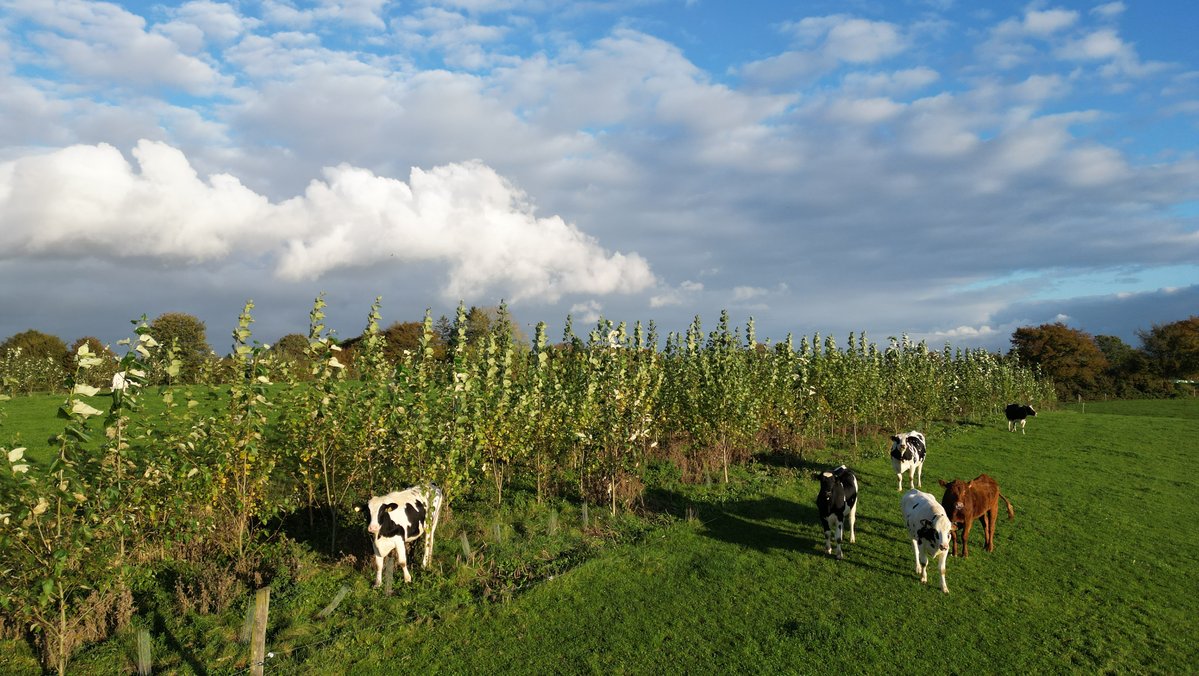
Agroforestry systems – the combination of trees and agricultural use – have the potential to improve the microclimate, promote biodiversity, increase soil fertility and create new sources of income for farms. Despite these advantages, their establishment in Schleswig-Holstein has been slow so far. The reason: there is a lack of business models for wood from agroforestry systems, as well as reliable data and information on economic efficiency, the impact on grassland and arable yields, and the benefits for climate adaptation.
Farmers are therefore faced with the question of whether an agroforestry system is suitable for their farm. Without reliable economic and crop production information, its introduction remains risky. Regional value chains – i.e. buyers, processing channels and sales markets for wood from agroforestry systems – are also virtually non-existent, which means that important financial incentives are lacking. In order for agroforestry systems and their ecological potential to be fully developed, a sound, practical database and clear prospects for wood utilisation are needed.
The AHOI.SH project creates precisely this basis. Extensive crop production, business management and wood technology data is collected in the existing agroforestry systems of the participating farms: How do wooded strips affect grassland forage yield and quality? What is the potential of poplar wood from agroforestry systems in Schleswig-Holstein?
Existing demonstration areas make the effects directly visible, and regional cooperation with wood processing companies is intended to help establish new value chains for agroforestry wood. This will result in the first practical assessment of how agroforestry systems can best be integrated at the operational level – not only ecologically valuable, but also financially viable.
The findings are incorporated into calculation models, a practical guide and a freely accessible AI-supported decision-making tool that enables businesses to make individual assessments. This allows farmers to use reliable data to determine which agroforestry model is suitable for their business. In addition, the aim is to engage in ongoing dialogue with political actors in order to advise on suitable funding conditions for the establishment of new agroforestry systems.
In the long term, the project aims to provide a sound basis for establishing more agroforestry systems in Schleswig-Holstein: as a climate-resilient form of cultivation, as a contribution to climate protection in a diverse landscape, and as an economically attractive option for agricultural businesses.
Click here for the project website with more information: https://www.ahoish.de/